
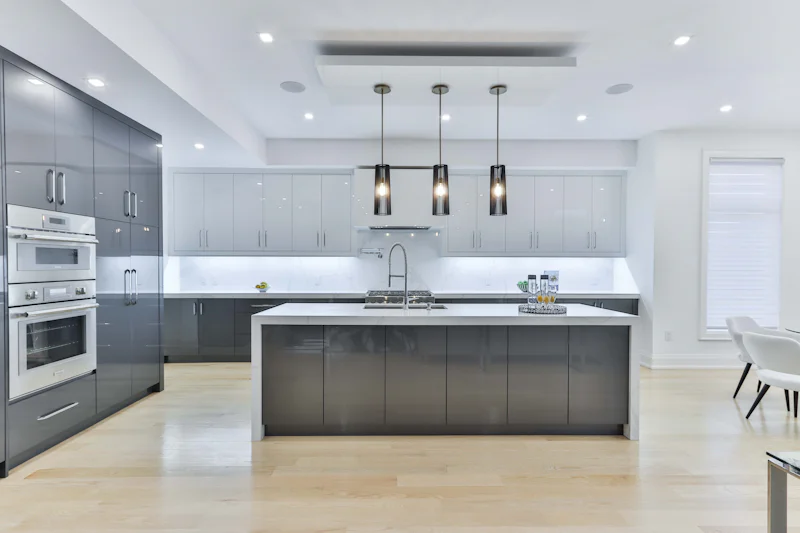
Cabinet painting in Fort Wayne
To paint kitchen cabinets in Fort Wayne, the doors come off, every surface is degreased, sanded and primed, and the job runs about one to two weeks with curing time.
Cabinet painting at a glance
- Best time
- Any time of year; curing is easiest when the house isn't humid
- Typical time
- About one to two weeks with curing time
- Permit
- Not needed
- What moves the price
- Number of doors, current finish, and color change
What cabinet painting involves
Cabinet painting in Fort Wayne is mostly prep. Kitchen cabinets carry years of cooking grease and hand oil, and paint will not hold on to either. The color goes on near the end. Everything before it decides whether the finish lasts or starts peeling around the handles in a year.
The job keeps your doors, boxes and layout. If you want a different door style, that is cabinet refacing instead.
The prep steps, in order
- Cover the kitchen. Counters, floors, appliances and the backsplash get masked. Spray work also needs the openings into other rooms sealed off.
- Remove and label. Doors and drawer fronts come off, hinges and pulls are bagged, and each piece is numbered so it goes back where it came from.
- Degrease. Every surface is scrubbed with a degreaser and rinsed. The area around the range and the trash pull-out usually takes the longest.
- Repair and fill. Dings get filled. If you are changing to different pulls, the old holes are filled now.
- Sand. A scuff sand dulls the old finish so primer can grip. Peeling paint from an earlier job gets stripped back.
- Prime. A bonding primer goes on bare wood and over the old finish. Stained oak often gets a stain-blocking primer so tannins do not bleed through white.
- Topcoats. Usually two coats of cabinet enamel, sanded lightly between them.
- Cure and rehang. Doors go back on once they are hard enough to handle, and hinges are adjusted so the gaps line up.
Spray or brush
A sprayed finish is smooth and even, with no brush marks. Doors and drawer fronts are usually sprayed flat, either in a shop or in a garage set up for it. The face frames stay in the kitchen, so they are sprayed under heavy masking or brushed and rolled in place.
Brushing costs less to set up and makes less mess. A good self-leveling enamel laid on with a fine brush can look close to sprayed from a few feet away. Up close, and in raking light from a window, you will see the strokes. Ask each painter how they finish the doors and how they finish the frames, since quotes often differ on exactly that.
Painting oak cabinets: will the grain show?
Yes, unless it is filled. Oak has open pores, and paint settles into them, so the grain pattern shows through even after two coats of white. If you want a smooth, flat look, ask for grain filler before the primer. It adds a full extra step on every door, so it adds time and cost. Maple, birch and MDF doors paint smooth without it.
Ask for a sample door finished in your color before the whole kitchen is done.
Which finishes hold up in a kitchen
- Waterborne alkyd and urethane enamels. The usual choice now. They level out well, dry hard, and stay white longer than oil.
- Two-part (catalyzed) coatings. The toughest finish, close to what factory cabinets get. Mostly sprayed in a shop.
- Oil-based enamel. Very hard, but it yellows over time, most of all on whites and in rooms with little daylight.
- Wall paint. Skip it on cabinets. It stays soft, sticks to itself where doors touch the frames, and marks easily.
Satin and semi-gloss wipe clean best. Flat finishes show every fingerprint on a cabinet door.
Curing time
Paint is dry to the touch long before it is hard. Most cabinet enamels take a few weeks to reach full hardness, so be gentle at first: no tape, no harsh cleaners, and close doors instead of letting them swing shut. Northeast Indiana humidity slows drying in summer. Dry, heated winter air speeds it up indoors, but a cold garage slows sprayed doors down, so ask where the doors will cure.
How much cabinet painting costs in Fort Wayne
National cost guides put painting a kitchen's cabinets at about $2,500 to $6,500, with a typical job near $4,000. The number of doors and drawers and the state of the old finish move it most.
| What moves the price | Effect |
|---|---|
| Number of doors and drawer fronts | Each one is cleaned, sanded, primed and coated on both sides |
| Current finish | Glossy factory finish, old varnish or peeling paint needs more sanding or stripping |
| Big color change | Dark wood to white can need an extra coat |
| Oak grain filling | An added step on every door and frame |
| Island, end panels and crown | More surface to prep and coat |
| New hardware layout | Old holes filled and new ones drilled |
| Painted cabinets in a pre-1978 house | Lead-safe sanding and cleanup |
Ask how many coats and which primer the price covers.
No permit is needed to paint cabinets.
DIY or hire it out
Doing it yourself saves the labor, which is most of the bill. It also takes far longer than a weekend. Sanding, priming and two coats on both sides of every door, with drying time between, can tie up a garage and a kitchen for weeks. The usual DIY failures are skipped degreasing, wall paint in place of enamel, and rehanging doors before they are hard enough.
A hired painter brings spray gear, dust control and a place to lay doors flat, so the kitchen is back in use sooner. If you go DIY, do one door first and wait a few days. Press a strip of tape on it and pull it off. If paint comes up with the tape, the prep needs another pass before you do the rest.
Lead in older Fort Wayne homes
Cabinets painted before 1978 may have lead in the bottom layers. Sanding them turns that paint into fine dust that settles on counters and floors. The EPA's Renovation, Repair and Painting rule says paid work disturbing more than 6 square feet of painted surface per room in a pre-1978 home needs an EPA Lead-Safe Certified firm. Sanding a kitchen's worth of doors crosses that easily. The rule covers hired work, but the dust is just as harmful if you sand it yourself, so test old paint before you start.
Cabinet painting questions
How long does cabinet painting take?
About one to two weeks for a kitchen, curing included. Doors are off for much of that, but the sink, counters and appliances stay usable.
Can laminate or thermofoil cabinets be painted?
Laminate can, with a bonding primer made for slick surfaces. Thermofoil that is peeling or bubbling is a poor candidate, because the vinyl keeps lifting under the paint. New doors through refacing usually make more sense there.
Will painted cabinets chip?
The edges around pulls and the lower doors near the trash wear first. A hard enamel over good prep resists most of it. Keep the leftover paint for touch-ups.
Should I paint or replace my cabinets?
Paint if the boxes are solid and you like the door style and layout. If the boxes are water-damaged or the layout does not work, look at new kitchen cabinets instead.
What the quote usually covers
Usually included
- Doors and drawers removed and labeled
- Degreased, sanded and primed
- Sprayed or brushed topcoats, then rehung
Often priced separately
- New hardware
- Filling old hardware holes
- Lead-safe sanding in pre-1978 homes
Confirm both lists in your written quote.
Tell us about your cabinets
Three questions, and a local cabinet maker calls you back to set up a measure and a written quote.
- A local cabinet maker calls youTo ask about the room and your timing.
- A measure at your houseSo the price fits your real walls.
- Your price in writingNothing is built until you say yes.
Ready to plan your cabinets?
Book a design consultation or call. You get a measure and a written quote before anything is built.